

At some point, more than 168,000 people decided they wanted to hear what I had to say about houses.
Not celebrities’ houses. Not multimillion-dollar listings in Los Angeles. Not even particularly glamorous houses, necessarily.
Old houses. Construction projects. Real estate decisions. Cabinetry. Occasionally, drain tile.
DRAIN TILE.
And apparently, there’s a market for this sort of thing.
Did you know that a sponsored post on my Instagram account is currently estimated to be worth about $8,000?
Eight. Thousand. Dollars.
To talk about something on the internet.
And here’s the interesting part.
I don’t sell sponsored posts.
Not because I have anything against making money. I’m actually quite fond of it.
But because I’ve always believed the most valuable thing KC and I could build wasn’t an Instagram account.
It was a business worth following.
And I think that’s an important distinction.
KC and I have spent years building businesses around something we genuinely love. Real estate, design, construction, and now education. All of it comes back to one thing: helping people create a home and a life they’ll love.
Somewhere along the way, a truly extraordinary number of people decided they wanted to follow along.
I’ve been asked quite a bit how that happened.
And while I certainly don’t have the algorithm figured out (if anyone does, please call me), I do have a few thoughts about building an audience when your actual job is running a business or two.
Here are five things I’ve learned.
1. Build the business before you build the audience.
This is the big one.
KC and I both came from Fortune 500 companies, where customer expectations were high, processes and accountability mattered, and the business had to actually deliver what it promised. We’ve brought that mentality into everything we’ve built since, from real estate to design to construction.
And we’ve worked incredibly hard.
Not on Instagram.
On the decidedly less glamorous things that make a business work.
Systems. Processes. Contracts. Communication. Technology. Customer experience. Making sure the experience behind the scenes is every bit as thoughtful as the finished product.
And then there’s the people.
OH MY GOSH, THE PEOPLE.
Our Director of Construction casually mentioned on Friday that a publisher once asked him to write a book. A BOOK. Which he did. He’s also flown across the country building homes for some of the most demanding clients in the world. How we convinced him to work with us remains a mystery, but I’m grateful every day.
Our newest hire has designed major events like the Presidents Cup, managing $1.5 million budgets to create extraordinary spaces that are literally torn down the next day.
Our senior designer has worked on projects like the Kimpton Hotel in Denver. Our showroom manager was a director at Dior.
And I could keep going.
Extraordinary talent without good systems can still produce a terrible customer experience. And excellent systems without extraordinary talent can produce some pretty unremarkable work.
You need both.
There are absolutely days when I don’t post anything because I’m too busy working. Sometimes several days. Occasionally weeks.
And I know that somewhere, a social media strategist is reading that sentence and experiencing a small medical emergency.
But the work comes first.
Our business doesn’t exist to give me something to post about. I post because we have a business doing things I think are worth sharing.
Something to try: Before you spend another hour thinking about how to market what you do, spend that hour making the experience of working with you better. Fix one recurring frustration. Simplify one process. Or give someone exceptionally talented more room to do what they do best.
The best marketing strategy in the world cannot compensate for a business that doesn’t deliver.
2. Stop trying to create content. Start paying attention.
I don’t spend my days wandering around looking for Instagram content.
I spend them looking at houses.
And construction sites. And stone slabs. And floor plans. And occasionally an invoice that makes me consider an entirely different career.
But somewhere in almost every day, something interesting happens.
A client asks a question I’ve answered a hundred times.
We discover something behind a wall that changes an entire renovation.
I walk through a perfectly lovely house and realize I wouldn’t buy it in a million years.
Someone asks me whether a $21,000 slab of quartzite is worth the money.
And I think, Oh, people would probably find this interesting.
That’s it.
That’s the beginning of most good content.
And here’s something I’ve learned: The things that seem completely ordinary to you might be absolutely fascinating to someone else.
I forget that most people don’t spend their Tuesdays debating stone edges or figuring out whether a century-old staircase can be saved.
But I do.
And apparently, there are quite a lot of people who want to hear about it.
Something to try: Start keeping a running note on your phone called “Things People Might Find Interesting.”
Every time someone asks you a good question, you change your mind about something, or you make a decision that requires actual expertise, write it down.
Don’t worry about turning it into content yet.
Just pay attention.
You might be surprised how much you already have to say.
3. Explain why, not just what.
There are approximately one billion beautiful kitchens on Instagram.
I made that number up, but I’m confident it’s close.
And while I love looking at beautiful kitchens as much as the next person, I find the decisions behind them infinitely more interesting.
Why did we move the kitchen to the other side of the house?
Why did we choose to restore the original windows instead of replacing them?
Why did we spend $30,000 on something that will eventually be buried beneath a basement floor? (Drain tile. It’s always drain tile.)
That’s where the interesting stuff is.
I don’t think people follow me because they want to see another beautiful house.
I think they follow me because they want to understand how I look at one.
And I’ve found that when you explain your reasoning, people don’t just learn something about houses.
They learn how to make better decisions for themselves.
Which, to me, is the entire point.
Something to try: The next time you share something you’ve made, accomplished, purchased, or decided, don’t just show the result.
Explain the decision.
What were your options? What did you consider? What did you reject? Why did you make the choice you made?
Give someone the information they would need to make that decision themselves.
A pretty picture might get someone’s attention. A useful explanation gives them a reason to come back.
4. Have an opinion. And be willing to explain it.
I have a lot of opinions about houses.
A LOT.
Some of them are very popular.
Some of them are not.
I think some old houses are worth saving at almost any cost. I think others are beautiful but terrible investments.
I think people can spend enormous amounts of money renovating a house and actually make it worse.
I think there are things worth splurging on and things that are absolutely not worth the money.
And I think people deserve to know the difference.
But here’s the thing.
I don’t share an opinion because I think it will make people angry.
I share it because I believe it, and because I’ve spent enough time doing this work to explain why.
There’s a difference between being provocative and having a point of view.
One is designed to get attention.
The other gives people something worth considering.
And I’m completely comfortable with someone disagreeing with me. In fact, some of the most interesting conversations happen when they do.
Something to try: Think about something in your profession, hobby, or area of expertise that you believe people routinely misunderstand.
What would you tell a friend if you weren’t worried about sounding too opinionated?
Now explain why you believe it.
You don’t have to be controversial. You just have to be willing to say something more interesting than what everyone else is already saying.
5. Know what your audience is actually for.
Let’s return to that $8,000 Instagram post.
Because I realize that telling you I could make $8,000 publishing an advertisement and then choosing not to might sound a little ridiculous.
I’ve never met a business owner who couldn’t put $8,000 to good use. Especially one with a team of wonderful people counting on them.
But every opportunity has a cost. The question isn’t whether we need the money. It’s whether it’s worth what it costs.
And for us, that comes down to what our businesses are actually for.
We sell real estate. We design homes. We build homes. We have a showroom full of beautiful materials. And now, through The Design Office, I’m teaching 34 homeowners and professionals in 26 cities and 16 states how to approach some of the biggest decisions they’ll ever make.
And if you look closely, every one of those businesses exists to do the same thing:
Help people create a home and a life they’ll love.
Sometimes that means helping someone find the right house.
Sometimes it means restoring the one they’ve already got.
Sometimes it means teaching them how to manage a renovation without making a very expensive mistake.
And sometimes it simply means explaining why I think a particular old house is extraordinary.
That’s what I want this platform to do.
Teach people. Give them confidence. Help them recognize good opportunities and avoid bad ones. Introduce them to beautiful things they might never have discovered otherwise.
Of course, having an audience has helped our business grow. I’m not pretending otherwise.
But there’s a big difference between an audience that grows because of the work and work that exists to grow an audience.
I want to be very careful about that distinction.
If every third thing I shared were an advertisement, this would start to feel a little like The Truman Show. Everyone smiling a bit too brightly, holding a product a bit too close to the camera.
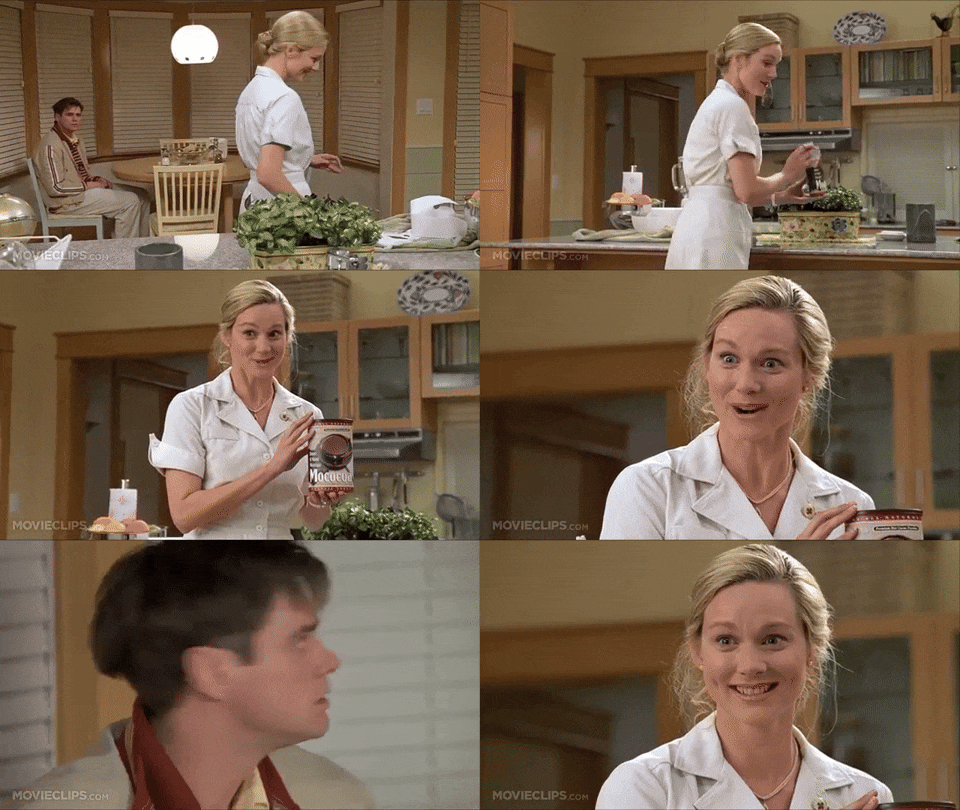
And I rather like the place we’ve created instead.
That’s not to say I’ll never work with brands. There are wonderful companies and craftspeople whose work I genuinely admire, and I can imagine partnerships that would make perfect sense.
But I don’t want to recommend something simply because someone is willing to pay me to recommend it.
That’s not why people are here.
And frankly, it’s not why I’m here either.
Something to try: Decide what you want people to trust you for. Then ask yourself whether the things you’re sharing, selling, and saying reinforce that trust.
Not every opportunity is a good opportunity. Especially when accepting it means giving up a little of the thing that made people interested in you to begin with.
The part I didn’t expect
Here’s the part I find funny about all of this.
I spent years building a career in real estate. Learning the business. Studying markets. Negotiating deals. Working with clients. Understanding houses.
KC and I took those experiences and built a business around something we genuinely love.
And somewhere along the way, I started sharing what we were learning, what we were building, and what I thought about it all.
Now, 168,000 people are here.
Which is wonderful.
And occasionally a little bewildering.
But I don’t wake up in the morning thinking about how to be an influencer.
I wake up thinking about our projects. Our clients. Our people. What we’re building. What’s working. What’s not working. And approximately 700 things that need my attention.
If something interesting happens along the way, I’ll probably tell you about it.
If I learn something that might save you money, I’ll definitely tell you about it.
And if I find a magnificent 100-year-old house with original plasterwork and an absolutely terrible kitchen, well, you can assume we’ll be discussing it.
Because that’s what I love.
And maybe that’s the biggest lesson of all.
You don’t have to become an influencer to build an audience. You have to build something worth following.
And if you’re willing to share what you learn along the way, you might be surprised how many people want to come along for the ride.
Even if the ride involves a lot of drain tile. Strong opinions on marble. And the occasional lemonade stand.
Until next Sunday,
Grace