

I once bought an antique door for $100.
A HUNDRED DOLLARS.
It was beautiful. Old wood, original hardware, the kind of patina you cannot fake no matter how many YouTube tutorials you watch.
It had character.
It was exactly the kind of thing I love, and I was extremely pleased with myself. When I carried it out of that salvage yard, I felt like I had personally outsmarted the entire home improvement industry.
I believe I told several people about my incredible find.
Possibly people who had not asked.
(KC, if you’re reading this, I know. You were one of them. Several times.)
Do you know what happens when you buy a beautiful antique door for $100?
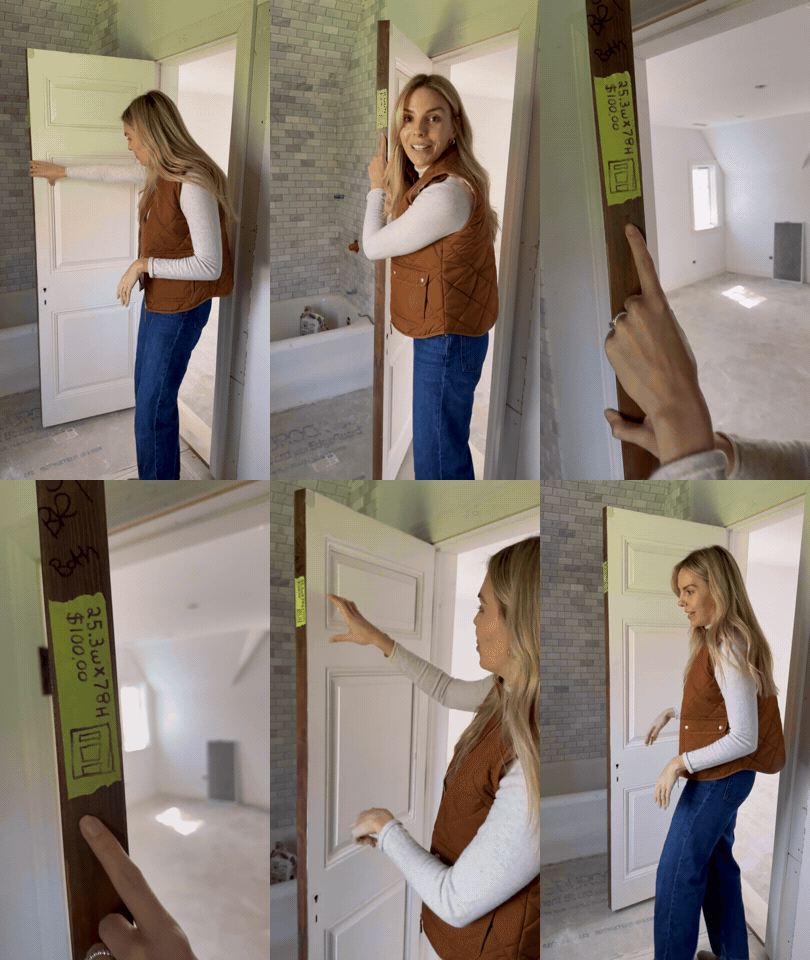
You get it home and discover it doesn’t fit a single door opening in your house.
Which is fine! Totally fixable! You simply have custom jambs made.
Do you know what custom jambs cost?
More than the door.
Significantly more than the door.
By the time my $100 treasure was properly hung, I had spent roughly what I would have spent on a perfectly lovely new door, the kind you can just order.
But MINE had character.
And a very interesting financial history.
I’d love to tell you that was an isolated incident.
Unfortunately, I have enough material for a small television series (wait, is that an Easter egg!?) and the door was one of my cheaper lessons.
At the time, I was renovating our houses while working a very demanding corporate job.
My days looked like this: meetings, calls, a quick stop at the house on the way to the next meeting, my phone buzzing in my back pocket the entire time.
I was also operating under a very specific delusion, which was that because I knew exactly what I wanted, everyone else would somehow know it too.
Take the kitchen sconces.
I had that kitchen completely designed in my head. The cabinetry. The light in the afternoon. Two beautiful sconces flanking the window, glowing just so.
I had even remembered to tell the electrician to leave whips for them, which, frankly, I thought was very responsible of me.
What I had not done was give him a drawing showing where they went.
So one day I swung by the house between meetings, walked into the kitchen.
I looked up.
And kept looking up.
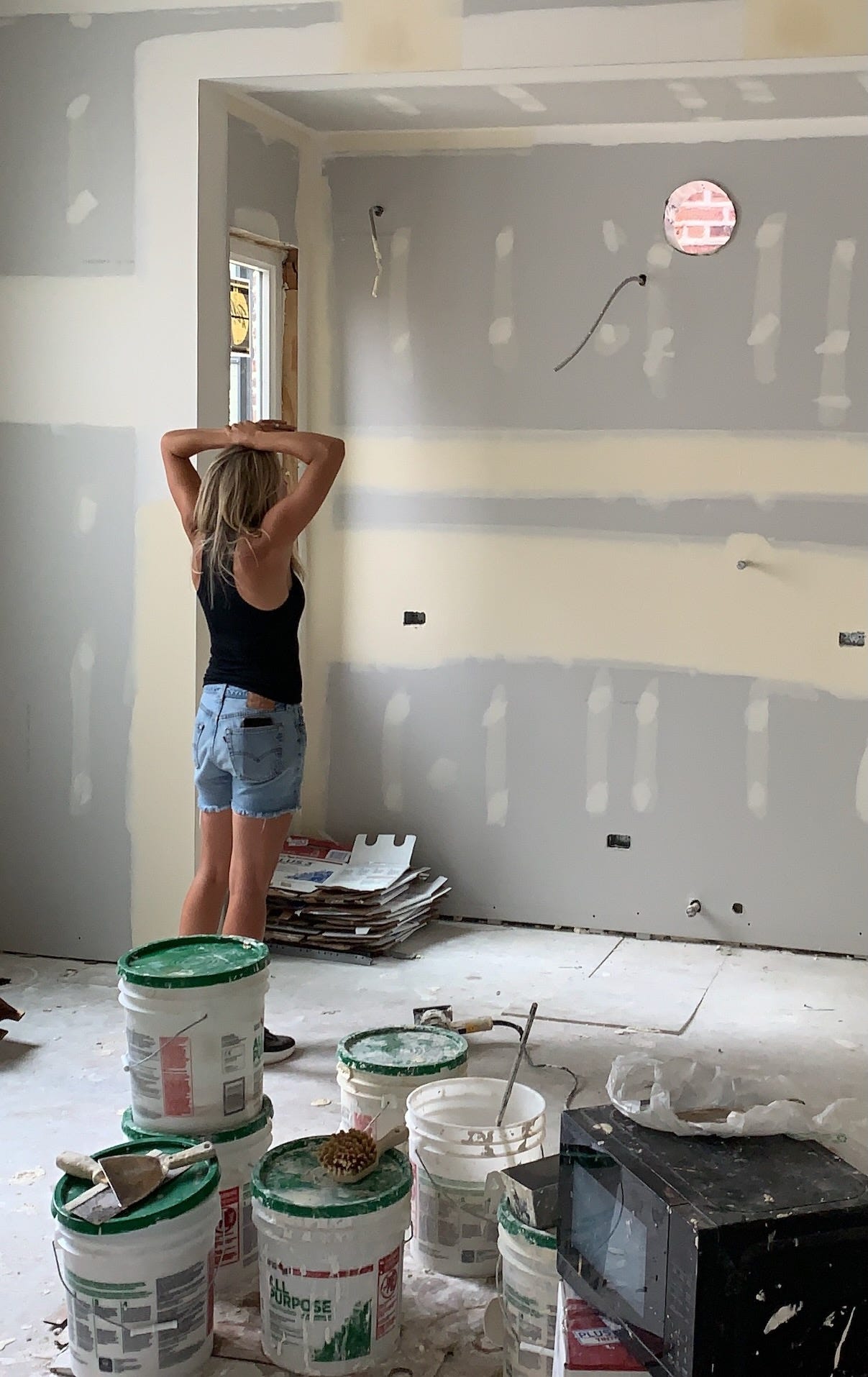
There were my whips. Coming out of the brand-new drywall in locations I can only describe as creative.
Not where I wanted them.
Not where any reasonable person would want them.
But technically, yes: there were whips for sconces.
The electrician had completed his assignment.
The assignment was just terrible.
And I was the one who had given it to him.
Now, a reasonable person might have taken this experience as a sign that she needed a better system for communicating design decisions.
I, however, had a corporate job to get back to and approximately 47 other decisions to make before lunch.
So I developed a system.
Post-it notes.
On everything.
Fabric samples. Paint samples. Cabinetry finishes. Little notes identifying what belonged where.
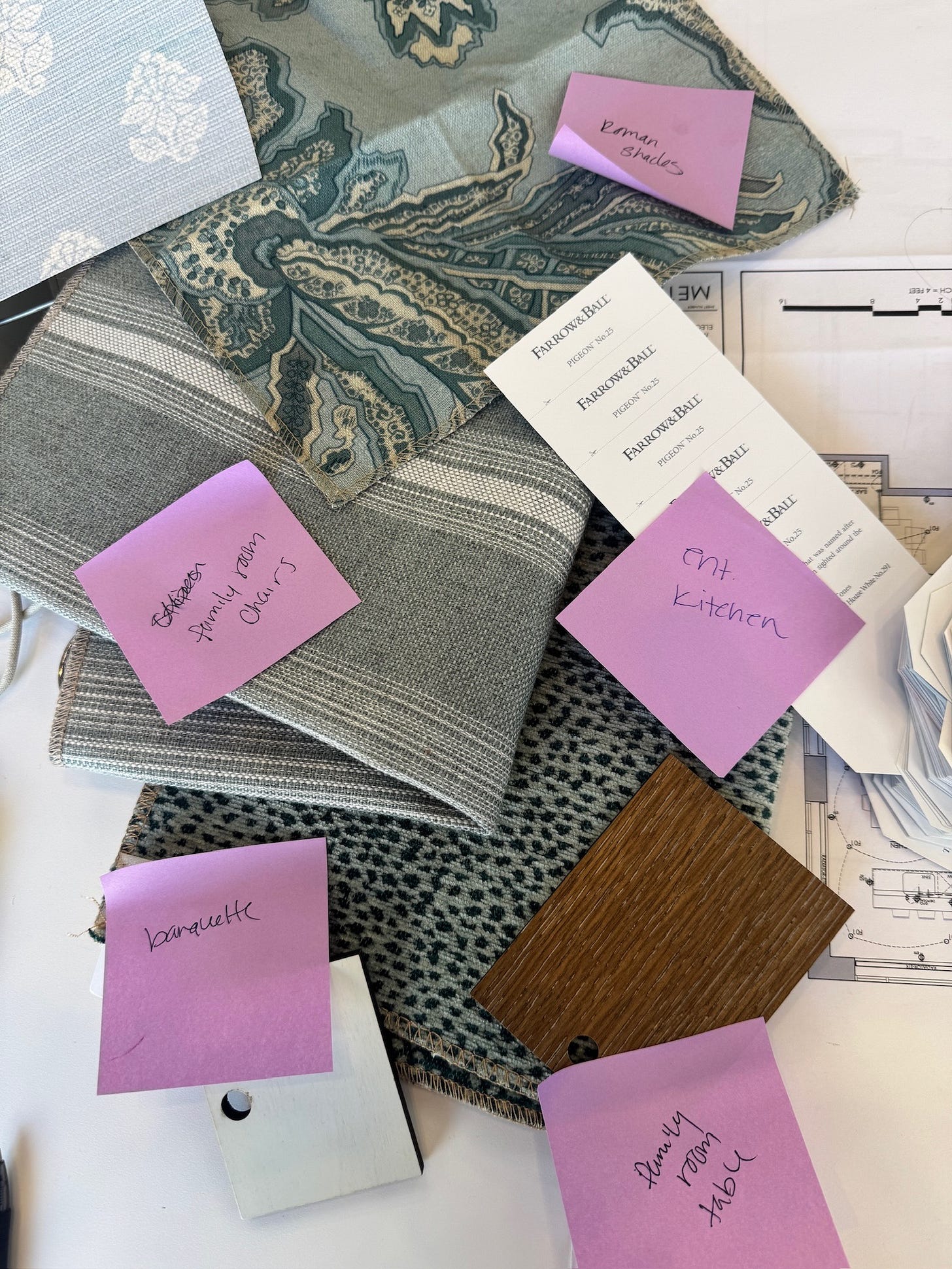
And for a while, it worked beautifully.
Right up until the Post-its started falling off, and I was left holding a pile of unidentified fabric and a rapidly shrinking sense of confidence.
Was this the fabric for the family room chairs?
The banquette?
The Roman shades?
WHO KNOWS.
The Post-it knows.
The Post-it is gone.
I also had a very sophisticated method for showing the carpenters what I wanted for the built-ins.
I drew them directly onto the walls.
Which, to be fair, is actually a great way to communicate scale. We still do it today.
We just also have drawings now.
For reasons.
I’d draw something. Change my mind. Draw over it. Change my mind again.
Eventually, the wall looked like a crime scene investigation conducted by someone with a ruler.
And because I never dated a single wall revision, there was no definitive record of what we had actually decided.
Then the wall got painted.
Goodbye, evidence.
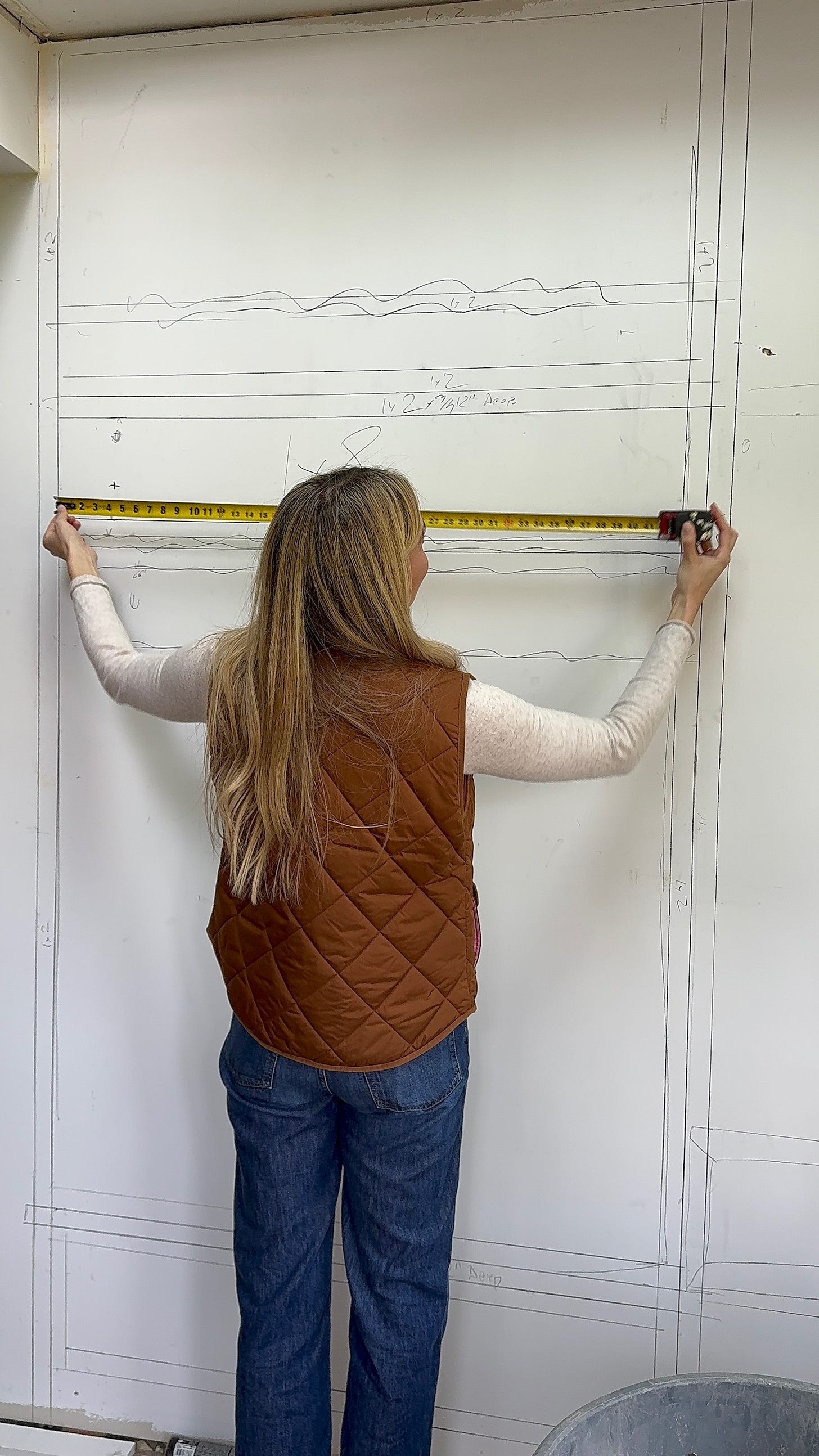
So when something got built wrong, I couldn’t even tell you which version of my own drawing was the right one.
I had invented a system in which the construction documents could be permanently destroyed by a painter.
Innovative, honestly.
Here’s the embarrassing part.
I actually knew a lot about houses.
Real estate is the family business, three generations of it. I grew up walking through properties with my family, learning to see what a house could become, what made it valuable and what didn’t.
I could walk into a house nobody else wanted and see exactly what it could be.
I had people I could call. People who had been buying, renovating, and building houses long before I came along. My Rolodex game was strong.
And STILL.
What I did not know, apparently, was that the electrician could not read my mind.
Or that Post-it notes have a finite adhesive lifespan.
Or that walls occasionally get painted.
Or that being a very capable corporate manager did not automatically make me a very capable design project manager.
I had the vision. I had the taste. I had approximately 400 Post-it notes.
What I didn’t have was a process.
And that, my friends, is a very expensive way to renovate a house.
Eventually, I learned.
I learned that a beautiful idea is only as good as your ability to communicate it. That the order in which you make decisions matters enormously. That any detail you haven’t thought through is a detail someone else will eventually have to guess at.
Then I learned to hire.
And I really went all out here.
Because if there’s one thing I learned from my years working at fast-growing companies, it’s that the fastest way to produce world-class results is to hire world-class talent.
So I did.
Today, my team includes designers who have literally designed hotels, project managers who’ve overseen installs from California to Florida and a new Director of Construction who has built some of the most gorgeous homes on Lake Michigan you’ve ever seen.
People who know things I don’t know. Who see things I don’t see. Who have spent entire careers becoming extraordinarily good at what they do.
I cannot tell you how wonderful it is to have them in the room.
We design and build truly extraordinary homes now, including historic restorations and new construction.
We have real construction documents.
With dates on them!
But I haven’t forgotten what it felt like before all of this.
Before the designers. Before the project managers. Before the documentation.
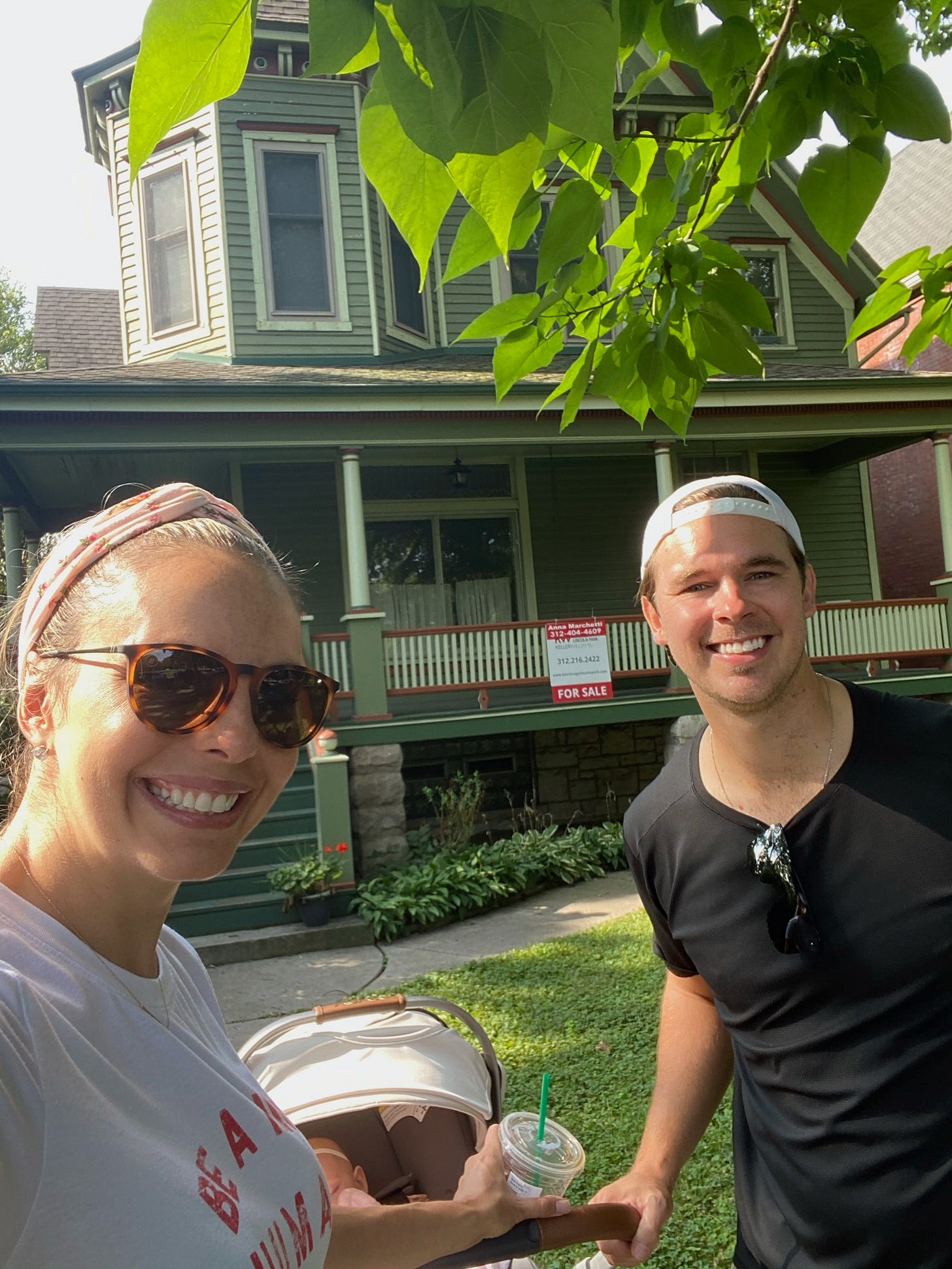
Back when I was standing in an old house, completely in love with what it could become, and trying to figure out how on earth to make it happen.
I wish someone had told me then that plumbing fixtures needed to be selected before framing.
That leaving a whip for a sconce was not the same thing as deciding where the sconce belonged.
That the decisions I was putting off because they seemed small would eventually become someone else’s very expensive problem to solve.
And I wish someone had explained that even when you hire extraordinarily talented people, you still have to know how to communicate what you want.
You have to get the vision out of your head.
You have to record it, share it, and teach it, so that the vision that’s in your mind becomes an actual house.
And you have to learn to articulate that vision in the right order. At the right time. To the right people.
Because a beautiful idea communicated too late can become a very expensive change order.
I think about those early days a lot.
About how much I loved those houses. How clearly I could see what they could become. And how frustrating it was to have to figure out the process while I was already in the middle of it.
Especially because I wasn’t even starting from scratch.
I had three generations of family experience behind me. I had people I could call. I had a whole lifetime of learning how to recognize a good house and understand its potential.
And I still had to learn how to turn what I could see in my head into something other people could actually build.
Which makes me think about all the people who don’t have that.
Who don’t have a family member to call when the contractor asks a question they don’t know how to answer. Who don’t have years of experience walking through houses, recognizing what works and what doesn’t.
Who have a beautiful vision for their home and are trying to figure out how to make it happen.
Because here’s what I know now.
You can hire the most talented people in the world. You can have the most beautiful inspiration photographs and the most wonderful intentions for your house.
But someone still has to understand what you’re trying to create.
And if you’re the homeowner?
That someone is you.
I would very much like to save you some money.
Every week, people send me their plans, their inspiration photos, their questions.
Some are renovating the house they’ve lived in for twenty years. Some just bought an old house they adore. Some are building from scratch.
And so often, I recognize a version of myself from fifteen years ago.
Someone who knows exactly what they love but isn’t entirely sure what to do next. Someone who is perfectly capable of making decisions but doesn’t necessarily know which decisions need to be made, or in what order.
Someone about to spend an extraordinary amount of money on a project they may only undertake once in their life.
And I want to reach through the screen and say:
WAIT.
Before you order the cabinets.
Before you move that wall.
Before you buy the antique door.
There are a few things I would really like you to know.
Because I’ve already paid for this education. And I see absolutely no reason for both of us to pay for it.
So, after years of answering your questions in Instagram comments, emails, and the occasional very lengthy DM, I decided to do something about it.
I made you a masterclass.
A free one.
I’m going to walk you through how I think about houses. How I evaluate a property, recognize its potential, and begin making the decisions that determine what it can become.
Essentially, I’m going to give you a little glimpse into my brain.
Which is a place KC has been trying to understand for years, so good luck to us all.
But seriously.
There is a very big difference between knowing what you like and knowing what to do.
And I’d like to help you bridge that gap.
Not so you can become an architect or a contractor. Not so you can do everything yourself.
So you can understand the decisions you’re making, ask better questions of the people you’ve hired, and recognize when something needs to be figured out before it becomes an expensive problem.
Because I think you deserve to understand what you’re doing before you spend hundreds of thousands of dollars doing it.

It’s free, and I made it for people who love houses as much as I do.
Which, if you’ve made it this far into a story about antique doors and electrical whips, I suspect includes you.
And if you already know you want to go deeper, the masterclass is the beginning of something bigger called The Design Office, my seven-week live online course.
Seven weeks. Seven executive decisions. The way I think through a house, taught in the order those decisions actually need to happen.
Enrollment for the Founding Cohort is open now and closes this Sunday, October 4, at 11:59 p.m. Central.

One last thing.
We’re about to begin restoring an 1898 Benjamin Marshall house here in Winnetka that you might recognize as Old Man Marley’s house from Home Alone.
It’s a big project.
A very big project.
And I’ll be making every one of these decisions all over again, this time for my own family.
The drawings will be dated. The stone will be chosen in the right order. The electrician will know precisely where the sconces belong.
And if I find another beautiful antique door for $100?
Well.
Nobody’s perfect.
xo,
Grace
P.S. I desperately want to hear about your renovation mistakes. Hit reply and tell me the most ridiculous thing you’ve ever done to a house. This is a judgment-free zone. I have personally spent a small fortune learning things I would have preferred to learn for free. Here for you.