

KC and I took our three children to the pumpkin patch this week.
By which I mean Whole Foods.
A humbling development for two people who used to take pumpkin season very seriously.
There was a time, many years and two children ago, when KC and I were the sort of people who went to actual pumpkin patches.
We had one new baby. We had coordinating outfits. We had all the time in the world to drive to the country, wander around looking at pumpkins, and take the sort of photographs that suggested we had absolutely nothing more pressing to do with our afternoon. It was wonderful.
Look at us.
Young. Well-dressed. A whole day devoted to selecting produce.
We had no idea how good we had it.
Fast-forward to 2026.
We now have three children, approximately four thousand competing obligations, and a family calendar that requires the logistical coordination of a military operation.
It’s October 18, and we have yet to make it to the pumpkin patch.
I would like to clarify that I have not given up hope. There is still next weekend. There are hayrides to be had, cider donuts to be eaten, and photographs of children sitting happily on hay bales to be taken.
But the children wanted to carve pumpkins now, and between work, school, and the general business of keeping three small humans alive, an idyllic afternoon in the countryside had not materialized.
So Whole Foods it was.
The children, I should tell you, had very big plans.
Soren had discovered Pinterest, which I am beginning to suspect was a mistake. She wanted to carve an entire scene into her pumpkin. A cat, a moon, and several other rather ambitious details that would have challenged a professional sculptor, let alone two parents armed with a grocery-store pumpkin carving kit.
Christian, who is four, had a different artistic direction.
He wanted to make the scariest jack-o’-lantern anyone had ever seen.
There was one condition. It couldn’t be so scary that he himself would be frightened by it.
A delicate brief, but I respected his vision.
Our youngest had no opinion except that she needed to chew every gourd in store. Which was… fun to manage.
Meanwhile, the older two were busy selecting all the wrong pumpkins.
Tiny pumpkins. Squashed pumpkins. Lopsided pumpkins. Little decorative gourds that would have looked absolutely darling arranged on the front porch but could not possibly accommodate the elaborate works of art they had planned.
They liked them because they were funny-looking, or a different color, or small enough to hold.
At one point, we were discussing whether we could carve a dragon fruit.
Then a kiwi.
The scope of work was expanding. The available carving surface was getting smaller.
Eventually, we made it home with pumpkins, a carving kit, and what I am choosing to consider a successful family outing.
And here, dear readers, is what our annual pumpkin tradition looks like these days.
Is it a hayride? No.
Did we spend an afternoon wandering through a picturesque pumpkin patch in coordinated fall outfits? Also no.
But pumpkins were carved, memories were made, and I am counting the whole thing as a win.
Besides, somewhere between the miniature gourds and the proposed dragon fruit, KC and I found ourselves trying to explain something that, in retrospect, I spend a surprising amount of my professional life explaining to adults.
You have to understand what you’re working with before you decide what you’re going to turn it into.
A tiny, crooked pumpkin might be a wonderful pumpkin. But if your vision involves an elaborate cat silhouetted against a full moon, you need enough room for the cat.
And the moon.
You can adjust the design. You can choose another pumpkin. What you cannot do is wish another twelve inches of pumpkin into existence.
And that, my friends, is how an otherwise ordinary trip to Whole Foods turned into a lesson in real estate investment.
Naturally.
What makes an old house worth saving?
You know I love old houses. I love their proportions and heavy doors, their millwork, their quirks, the strange little rooms nobody thinks to build anymore. I love finding beautiful things underneath ugly things and discovering craftsmanship that someone spent the past fifty years trying to cover up.
I particularly love taking a house other people have given up on and showing everyone what it can become.
But I do not love old houses at the expense of being a sensible person.
I am not inclined to put hundreds of thousands of dollars or more into a house, knowing I’ll never see that money again, solely because I love its architecture. Perhaps someday I’ll have so much disposable income that it won’t occur to me to do the math. May we all be so lucky.
For now, I’m the product of a family that values being practical, reasonable, and wise with money. I value a beautifully restored home. I also value a good investment. I don’t see why I should have to choose between them.
So when someone asks how I know whether an old house is worth saving, my answer may surprise them.
I don’t start with the staircase, the windows, or even the architecture.
I start with the neighbors.
What are the other houses worth?
Every house has a ceiling. Not a literal ceiling, although those deserve some attention too.
I mean the price that comparable buyers are likely to pay for a finished home in that location. Before I develop any grand ideas about what a house could become, I want to know what the best houses around it have actually sold for.
Here’s a simplified example:
Say I find an old house listed for $1 million. It’s 5,000 square feet, with a kitchen from 1978, tired bathrooms, aging mechanicals, and a renovation list long enough to require its own binder.
None of that scares me particularly.
What I want to know is: What do beautifully finished 5,000-square-foot houses sell for nearby?
If they’re selling for $2 million, $3 million, or even $4 million, I get interested. Very interested.
Because now I have something to work with. I know there’s a market for homes of that size at a significantly higher price point, which means I may be able to invest heavily in the renovation, do all the creative and fulfilling things I want to do to this house, and still come out ahead.
Of course, that doesn’t mean my house will automatically be worth $4 million when I’m finished. The lot matters. So does the street, the architecture, and the quality of the finished home. I can’t point to a $4 million house down the block with a spectacular lot and world-class architecture and assume mine will command the same price just because they’re both 5,000 square feet.
But I know there’s potentially a significant gap between what I’m paying and what my house could be worth.
And that’s where I start doing the math.
Now let’s reverse it:
Same $1 million purchase. Same 5,000 square feet. Same enormous renovation.
Except the best comparable homes in the neighborhood sell for $1.2 million, even when they’re beautifully finished.
Well.
I have a problem.
Because it doesn’t matter how much I love the staircase if the house needs $800,000 of work and the surrounding market is unlikely to value the finished result above $1.2 million.
I can restore the millwork, replace the plumbing, and make it the nicest house on the block.
I will also have spent a tremendous amount of money producing something the market doesn’t value anywhere near what it cost me.
That’s not a project I want to take on.
The house might be beautiful. It might deserve to be preserved. But a house being worth saving doesn’t automatically mean it’s worth buying and saving by you.
A house is not worth what you spend on it
I wish I could put that sentence in front of everyone contemplating a major renovation.
The market doesn’t reimburse you for the eighteen slabs you considered, the structural surprise behind the kitchen wall, or the extra months you waited for custom windows. It doesn’t care how hard you worked, how much you love the house, or how many samples are still living in the trunk of your car.
It cares what another buyer is willing to pay.
That’s why I work backward from a realistic finished value, based on actual comparable sales rather than a neighbor’s ambitious asking price.
I take the purchase price, add the cost of a proper renovation, and then account for everything people conveniently forget: architecture and design, permits, financing, taxes, insurance, temporary housing, carrying costs, contingencies, and the expenses of selling if that’s the plan.
Your time is part of the investment
If you’ve never restored a historic home, I cannot overstate how consuming it can be.
Even with an excellent architect, builder, and design team, there are hundreds of decisions. Old houses are particularly skilled at producing questions nobody thought to ask until a wall came down. You uncover one condition, which leads to a specialist, which leads to a revised plan, which pushes another decision back twelve weeks.
It’s fascinating. It’s also work.
I enjoy it. I am fortunate that this is what I do professionally. But that doesn’t mean my time is free. And neither is yours.
I am not interested in devoting months or years to a property only to find myself substantially underwater when I could have put that same time, energy, and capital toward another project with better prospects.
Every project you choose is also a project you’re choosing instead of something else.
There is a cost to that choice, even if it never appears on a construction invoice.
I want to look at the finished house and feel proud of the architecture. I also want to know I made a thoughtful decision about how to spend a meaningful part of my life getting there.
Isn’t preservation worth more than money?
Sometimes, absolutely.
We’ve lost remarkable buildings because demolishing them was easier than understanding what made them special. Good craftsmanship deserves respect, and I believe old houses can be adapted for modern families without stripping away their character.
In fact, I think a beautifully restored old home can be more valuable than almost any other kind of house. There is something about the architecture, the history, and the craftsmanship that simply cannot be replicated, no matter how much money you spend.
And I have tremendous respect for the people who preserve these homes at any cost. People who recognize something worth saving and are willing to invest whatever it takes to do it properly. I hope one day to have the luxury of approaching a restoration that way myself.
But given my upbringing and my family’s history in real estate, I find it almost impossible to separate a home’s beauty from its financial potential. It’s just how I’m wired.
That doesn’t mean every restoration needs to make financial sense on paper, or that I think less of projects that don’t. Some of the most beautiful homes in the world exist because someone cared more about creating something lasting than recovering every dollar.
I just happen to love the challenge of finding a house where the architecture and the economics are equally compelling.
And when those two things come together, I think there’s something particularly wonderful about giving an old house a new life.
Which brings me to Old Man Marley’s house
We’re preparing to restore our own historic home, the Benjamin Marshall-designed house next door to the Home Alone house, which many of you know as Old Man Marley’s.
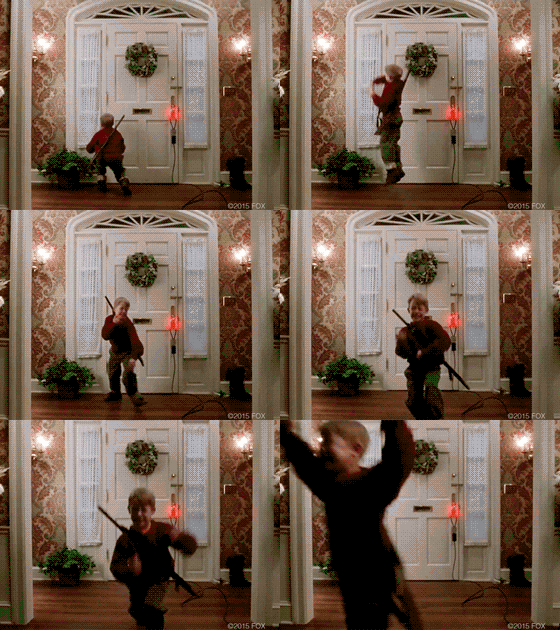
I am wildly excited about it. Its architecture makes me fall in love all over again.
But its history, and the fact that people recognize it from a movie, don’t exempt it from the same questions I ask about any other project. What are the surrounding homes worth? What does it cost to restore this one properly? How can we preserve the features that matter while making the house genuinely comfortable for our family?
I want the heavy doors, the proportions, the craftsmanship, and every detail that makes an old house feel like an old house. Underneath all that, I want properly designed heating and cooling, modern electrical, reliable plumbing, and the conveniences we enjoy today.
My favorite homes look as though they’ve been there forever but have been quietly rebuilt to live beautifully.
Old on the outside. New under the hood.
The challenge is making all of those decisions without losing sight of what makes the house special or what the project is ultimately worth.
Back to the pumpkins
There was nothing wrong with those tiny pumpkins. I’d happily line them up on the porch.
They just weren’t the right canvas for what the children wanted to make.
Soren’s smiling kitten needed room for two little cat ears. Christian’s terrifying-but-not-too-terrifying face needed a surface big enough for a face. As for the dragon fruit, I admire the imagination, but certain ideas should probably remain theoretical.
An old house can be charming, significant, and full of promise without being the right one for your plan or your budget.
The trick isn’t buying the prettiest house, or the cheapest one. It’s finding the house whose potential, constraints, and financial upside justify what you’re going to put into it.
I believe two things can be true at the same time: old homes are worth saving, and the people who save them deserve to feel that their time, money, and effort were well spent.
When I find a house with the architecture I love, good bones, and enough room in the numbers to do something exceptional?
That’s my kind of pumpkin.
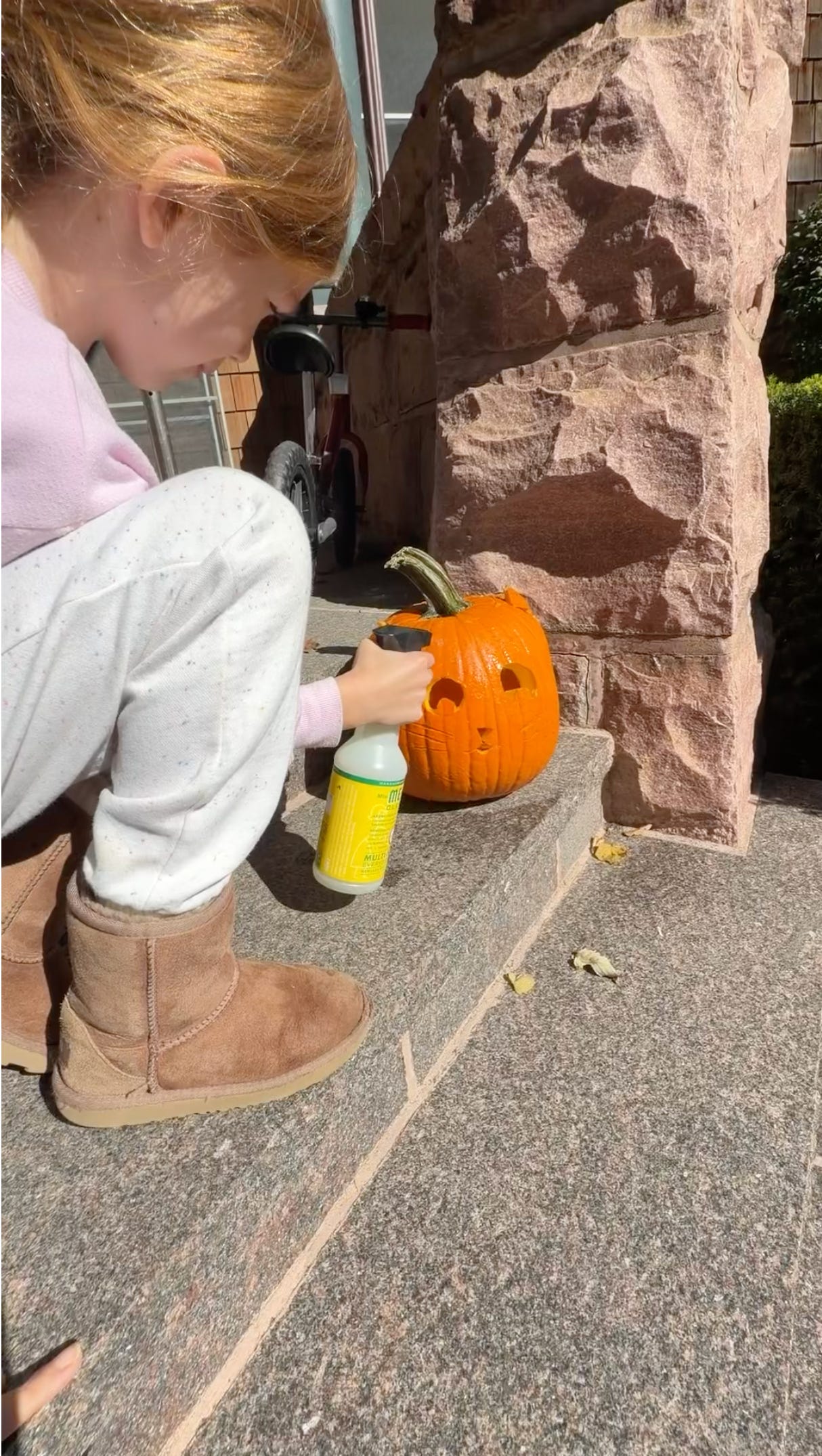
And don’t forget to spritz your pumpkins with a little vinegar to keep the squirrels at bay! Another trick I learned the hard way.
Until next Sunday,
Grace
P.S. The Design Office opened to its Founding Cohort on Friday with students from 26 cities across 16 states, all bringing their own houses, plans, and questions into the room. We’ll do it again in the new year, so if you missed the first round, you haven’t missed your chance. Join the waitlist HERE and you’ll be first to find out when enrollment reopens.
P.P.S. If building a new home is more your speed, The Foresman in Glenview has only 10 of its original 60 homesites remaining. If you’ve been thinking about building your dream home there, now is the time to explore the remaining lots and choose the one that’s right for you. Find them at theforesman.com.